

The facility has a documented chemical management strategy
Version 1 - Last updated
06 Aug 2026
A supplier should first define the scope for implementation. Once that is determined then set the goals for that scope.
Defining scope
A supplier’s defined scope coverage can be:
- Main facility that includes all operations on site.
- Multi-locational facilities (if applicable).
- Immediate level of upstream sub-suppliers/subcontractors.
- Next level of upstream sub-suppliers/subcontractors.
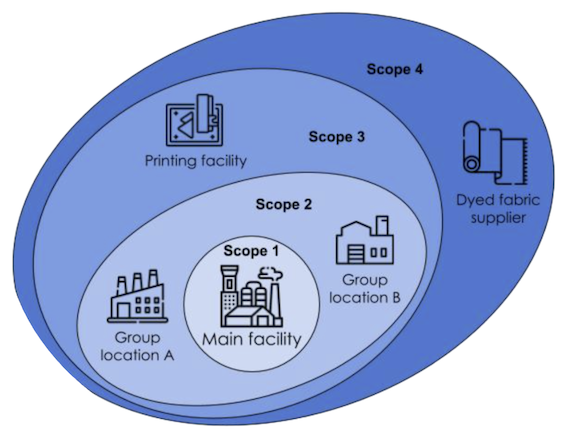
| Scope 1: | The main facility |
| Scope 2: | The main facility + group facility location A and location B |
| Scope 3: | The main facility + group facility location A and location B+ printing facility (immediate sub-supplier) |
| Scope 4: | The main facility + group facility location A and location B+ printing facility (immediate sub-supplier) + dyed fabric supplier (next level of sub-supplier) |
Setting goals
The goals to be set for each scope should be ‘SMART’ (Specific, Measurable, Achievable, Relevant and Time-Bound) and should be tracked for implementation.
Each goal should be translated into the action plan for implementation that details the methodology and timeline.
Examples of goals for chemical management:
- To prepare a chemical inventory list
- To achieve x% of ZDHC MRSL conformant input chemicals
- To implement an emergency response plan
- To provide PPE for all workers
- To train all staff on chemical management topics
- To engage with x% upstream suppliers for ZDHC Supplier RtZ implementation
Prepare an action plan to implement the chemical management strategy
Suppliers should prepare an action plan to implement the chemical management strategy that details:
- Methodology
- Resource requirements
- Timelines
- Tools or technology exam
