

Sample wastewater
This section provides requirements for proper wastewater sampling procedures. It outlines the approved sample containers, preservation methods, and maximum holding times to ensure sample integrity and analytical accuracy.
Wastewater sample collection
The following must be followed in order to obtain representative samples for analysis:
Samples shall only be taken by trained, qualified and approved samplers. ZDHC Approved Wastewater Laboratories shall nominate their samplers to undertake the training using the Solution Provider Platform.
Wastewater samples shall be collected as composite samples following ISO 5667 - 10 guidelines: “Guidance on Sampling of Wastewater”.
Sampling using calibrated and refrigerated autosamplers is preferred. To ensure representative samples, composite sampling must be performed for no less than six (6) hours, or a length of time that represents the entire production process cycle (which could be more or less than six (6) hours), with no more than one (1) hour between discrete samples. Each discrete sample must be of equal volume. The composite sample container must be cooled during sampling.
Automatic samplers are supervised throughout the sampling process: When an automatic sampler is used (e.g., set up by the laboratory technician to collect multiple aliquots over a defined period), the sampling process must always be supervised. Lack of supervision may result in insufficient control over the sampling conditions (e.g., dilution of wastewater with clean water, discontinuous discharges, or other irregularities). Therefore, the technician is required to remain on-site for the entire duration of the sampling activity to ensure proper oversight and reliability of the sampling process.
Manual discrete sampling follows defined time and volume requirements: If necessary, samplers from a ZDHC Approved Solution Provider can collect discrete samples by hand for no less than six (6) hours, with no more than one (1) hour between discrete samples. Each discrete sample shall be of equal volume and combined to produce one composite sample. The composite sample container must be cooled during sampling.
Composite sample volume must be sufficient for all containers and required analyses: All of the sample containers will be filled from the same bulk composite sample. A minimum sample volume of 20 litres is required in order to fill all of the sample collection containers. Regarding the volume needed for the analysis, each laboratory shall ensure that the volume of water shipped will allow for duplicate tests and quality control. The sampler shall co-ordinate the exact volume for testing with their laboratory.
Wastewater sampling is conducted during normal production operations: Samples must be taken during a time representing continuous and normal production and continuous and normal wastewater treatment. Collect wastewater samples in a way that represents the entire production cycle. As part of a document control purpose, facility management needs to confirm the fact that sample collection has been done during normal factory operation.
NOTE: The ZDHC Approved Wastewater and Sludge Laboratory will request a 10 day (including weekends, but excluding public holidays) production window from the facility. Upon receiving this request, the facility is required to specify the specific days within that window during which production activities will occur at its peak. This timeframe will then be designated as the sampling window. During the sampling window, the laboratory reserves the right to perform sampling on any production day through the sampler from a ZDHC Approved Wastewater and Sludge Laboratory, without specifying the exact date in advance. This process follows a semi-announced sampling approach, ensuring both operational feasibility and the integrity of the sampling process are maintained. The facility will be notified that a sampler from a ZDHC Approved Wastewater and Sludge Laboratory may visit at any point during the declared production days, and should be prepared to accommodate and extend the fullest cooperation to the sampler for sampling purposes.
Sampling Start Time Adjusted for ETP Lag Time: Start the production cycle wastewater sampling after a time that compensates for the lag time in the effluent treatment system (ETP). For example, if the plant starts production at 8:00 AM and the lag time in the ETP is 3 hours, then ETP wastewater discharge sampling will start at 11:00 AM.
Sampling from homogenisation tanks with extended holding time is used for composite sampling: In situations where there is a homogenisation tank in which the average holding time is greater than 12 hrs, a single sample collected from such a tank can be treated as a composite sample. However, the volume of wastewater in a homogenisation tank must represent the entire production process/cycle.

Samples must not be taken if the wastewater is diluted.
Key parameters are monitored hourly for direct discharge facilities: For a direct discharge facility, the following parameters must be measured every hour during the composite sampling: pH, temperature difference or temperature absolute, persistent foam, wastewater flow rate, total chlorine and dissolved oxygen. The hourly measurements will be reported with the field data report form, and the average will be reported with the ZDHC Gateway Electronic Data Reporting (EDR) template.
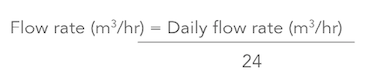
Wastewater flow rate (m3/day) must be collected and reported with the laboratory test results using the EDR template. Collect flow rate data seven times over a six hour period to get the hourly average. Then, multiply by 24 (hours), or the length of time the plant operated daily, to get m3/day.
Sampler should use the required ZDHC Wastewater Sampling Field Data Form and Representative Sample Declaration.
Sampling is conducted for multiple discharge locations: If a supplier has multiple discharge locations (discharged wastewater/effluent) for industrial wastewater, samples must be taken and analysed for each discharge location.
Samples from multiple locations are tested separately and not blended: Samples from multiple sample locations must be tested separately and not blended together. Each facility with a separate address needs an individual AID on the ZDHC Gateway to report their wastewater and sludge data and generate a ClearStream Report individually.
Suppliers must meet ZDHC’s definition of zero liquid discharge (ZLD) treatment system.
Follow sampling and testing requirements for key parameters: Specific requirements for sampling ZDHC MRSL, conventional parameters, anions and metals.
Wastewater sample containers and preservatives
The following requirements must be followed to ensure representative wastewater samples are collected and handled for analysis:
The appropriate sample collection container and preservative can vary depending on the standard test method used. Therefore, verify the proper container and preservative with the test method used at the laboratory.
A temperature indicator bottle should be included with each shipping container. The temperature indicator bottle should be clearly labelled. If the sample shipping time is short, collect a sub-sample from one of the sample containers and measure and report the temperature received at the lab.
- Total phosphorus
- Mercury
- Halogenated solvents / Volatile Organic Compounds (VOC)
- Perfluorinated and polyfluorinated chemicals (PFCs)
The field blanks shall use the same containers as the samples and will be filled with reagent grade laboratory water (ASTM D1193 or ISO 3696 water grade 1).
Wastewater Sample Containers and Preservatives Table
Wastewater Sample Containers and Preservatives for MMCF facilities Table
- Camera
- The following sample collection forms:
- Wastewater Sampling Request Form
- Wastewater Sample Chain of Custody Form
- Shipping and Customs Forms
- Wastewater Sampling Field Data Form or MMCF Sampling Field Data Form
- Lab Sample Container List with preservatives
- Auto sampler with refrigeration capabilities
- Ice or cold packs, or a portable freezer/fridge with a working range of 1-4˚C if manual sampling is necessary and acceptable.
- Ice or cold packs for shipping the samples.
- ISO 17025 traceable thermometer for measuring sample temperature.
- pH measurement equipment and supplies
- Meter with temperature compensation capabilities. pH / LF temperature compensation: pH temperature compensation for indication of the pH value at the current temperature, with LF measurement converted to the reference temperature of 20°C.
- High-quality probe
- Buffer solutions 4, 7, and 10
- Laboratory control sample (LCS) or correlation testing sample with a known value
- Total chlorine measurement
- For DPD test: hand-held meter, DPD reagent packets, distilled water for rinsing, GEL standard to check meter calibration.
- Dissolved oxygen measurement
- For meter and probe: hand-held meter, oxygen probe, membrane kit for probe
- Lab sample container kit with preservatives
- Cold storage container (like a cooler) for shipping samples
- Facility information that has been requested ahead of the sampling date:
- Legal discharge permit
- Sampling locations – the crew may need multiple sample collection kits.
- Drawing of the facility layout that includes identifying sample collection points.
- Point of contact for the owner of the analytical data – for example, a brand that is paying for the testing.
- Safety equipment required by the lab, facility, brand, or others. This may include safety glasses, safety shoes, a high-visibility vest, a hard hat, or other items.
- Ice packs or Ice with zip-lock bags
- Homogenisation container 20 litres
Wastewater sample holding time
The table below presents the recommended and maximum holding times for each of the wastewater testing parameters.